


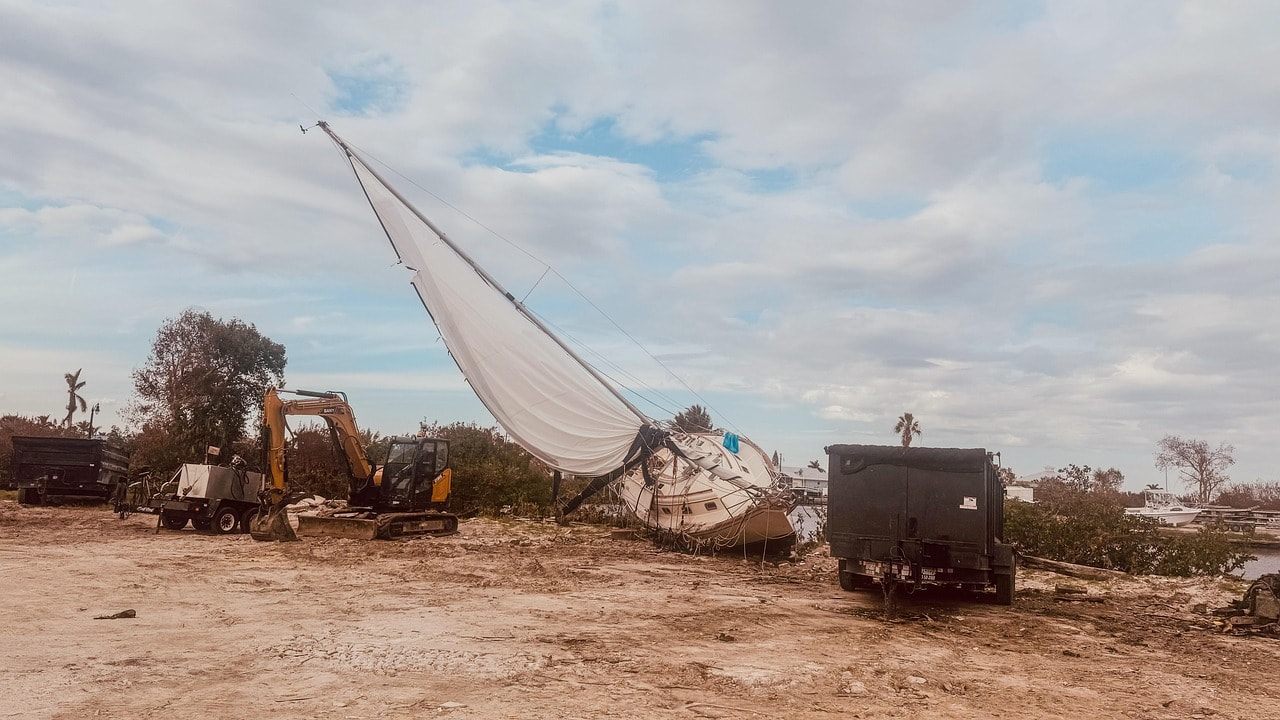
Business continuity vs disaster recovery. Understanding the difference between these two strategies can determine whether your organization survives the next crisis. When Hurricane Ian devastated Florida in 2022, causing over $112 billion in damages, businesses with both plans bounced back quickly, while others closed permanently. Whether you’re managing organizational risk, building a career, or looking into a degree in crisis and disaster management, mastering these concepts is essential for protecting operations and advancing your professional future.
Business Continuity vs Disaster Recovery: Quick Comparison
| Aspect | Business Continuity | Disaster Recovery |
| Scope | All critical business operations across the entire organization (personnel, customer service, supply chains, communications) | IT infrastructure, data systems, and technical operations (servers, networks, applications, data restoration) |
| Timing | Proactive – activates before and during disruptions to maintain operations throughout the crisis | Reactive – initiates after the incident occurs to restore systems to normal operational status |
| Primary Objective | Minimize operational disruption and maintain customer service during the crisis | Rapidly restore IT services to minimize downtime and data loss following technical failures |
| Key Stakeholders | Business leaders across all departments (operations, HR, facilities, customer service) | IT department, technical personnel, data security specialists, and recovery teams |
| Success Metrics | Operational uptime, revenue maintenance, customer retention during disruptions | Recovery time objectives (RTO), recovery point objectives (RPO), data restoration completeness |
Key Takeaways: Business Continuity vs Disaster Recovery
- Business continuity maintains operations DURING crises using backup processes and alternative solutions
- Disaster recovery restores IT systems AFTER disruptions with focus on data and infrastructure recovery
- Scope differs significantly: BC covers all business functions while DR focuses specifically on technology
- Timing distinguishes them: BC is proactive (before/during), DR is reactive (after the event)
- Organizations need both strategies for complete protection, 40% faster recovery when integrated
- Florida businesses face unique risks requiring comprehensive planning due to hurricanes and climate threats
- Professional education accelerates careers in business continuity, disaster recovery, and emergency management fields
Five Key Differences Between Business Continuity and Disaster Recovery
Understanding these distinctions helps organizations build comprehensive protection against potential threats:
- Scope of Coverage
A business continuity plan addresses all critical operations across the entire organization. This includes personnel management, customer service, supply chains, communications plans, and business processes.
A disaster recovery plan focuses specifically on IT infrastructure, data systems, critical applications, and technical operations. DR strategies concentrate on data centers, servers, networks, and restoring systems to operational status.
- Timing and Activation
Business continuity activates before and during disruptions, maintaining operations throughout the crisis event and preventing interruptions to normal operations.
Disaster recovery initiates after the incident occurs, working to restore IT services and data access to resume normal operations following technical failures.
- Primary Objectives
The primary objective of business continuity is to keep operations running smoothly during a disaster, minimizing operational downtime and maintaining customer service during the crisis.
The primary objective of disaster recovery is to quickly restore IT services to minimize downtime and data loss following technical failures or cyber incidents.
- Key Stakeholders
Business continuity involves business leaders across all departments including operations, human resources, facilities, and customer service teams coordinating organizational stability.
Disaster recovery centers on the IT department, technical personnel, data security specialists, and recovery teams managing infrastructure restoration.
- Success Metrics
Business continuity measures operational uptime, revenue maintenance, and customer retention during disruptions, evaluating the organization’s ability to maintain essential functions.
Disaster recovery tracks recovery time objectives (RTO), recovery point objectives (RPO), data restoration completeness, and how quickly teams can restore data access to critical systems.
How Business Continuity and Disaster Recovery Work Together
Organizations achieve maximum resilience when business continuity and disaster recovery strategies integrate seamlessly into unified BCDR programs.
These complementary approaches address different aspects of organizational protection. Business continuity keeps the organization functioning while the disaster recovery plan restores full technical capabilities.
Consider a healthcare provider experiencing a ransomware attack that threatens both business operations and critical data. The business continuity plan activates immediately, routing patient care to paper-based systems and alternative work environments.
Medical staff continue treating patients using alternative documentation methods while maintaining internet access through backup connections. Meanwhile, the disaster recovery team executes DR strategies to restore electronic health records, imaging systems, and patient management applications from secure data backup locations.
Uptime Institute research demonstrates 60% downtime reduction and 40% faster recovery when both strategies integrate effectively.
Organizations with only business continuity plans may maintain operations during disruptions but struggle to restore full technical capabilities efficiently, potentially losing critical data.
Conversely, strong disaster recovery capabilities mean little if the organization cannot maintain basic business processes while systems recover.
Integration allows business operations to continue at reduced capacity while IT teams execute recovery procedures. This approach minimizes financial losses and maintains customer confidence throughout the crisis, protecting the organization’s reputation.
Coordination between business continuity and disaster recovery teams proves essential during actual incidents. Clear communication protocols ensure both teams understand organizational priorities, resource allocation decisions, and recovery progress.
Regular joint drills and AI-driven simulations help identify gaps where business continuity and disaster recovery plans intersect. In 2026, organizations increasingly view BC and DR as a unified BCDR strategy to strengthen organizational resilience and cyber resilience.
An integrated approach to business continuity and disaster recovery ensures that organizations can withstand immediate impacts and recover swiftly from technical failures, whether caused by natural disasters, power outages, or cyber threats.
Why Florida Businesses Need Both Business Continuity and Disaster Recovery
Florida’s unique risk profile makes comprehensive business continuity and disaster recovery planning essential for organizational survival.
Hurricane season brings six months of potential major storms each year that can interrupt normal operations and cause significant financial losses.
Rising sea levels threaten coastal infrastructure where most business activity concentrates, putting data centers and critical facilities at risk.
Tourism, hospitality, and healthcare industries dominate Florida’s economy—sectors requiring constant operations and high availability.
These industries cannot afford extended downtime without losing customers to competitors, making crisis preparedness essential for Florida-based organizations.
Climate change intensifies these challenges significantly.
Climate projections indicate continued sea level rise and increased storm intensity, requiring more robust DR plans.
Businesses must prepare for traditional disasters plus emerging threats. These include cyber attacks, supply chain disruptions, and pandemic closures that previous generations never faced.
Florida’s concentration of financial services, healthcare facilities, and technology companies creates attractive targets for cyber criminals seeking to exploit vulnerabilities and cause data breaches. Ransomware attacks can disable operations as effectively as natural disasters.
Organizations need disaster recovery capabilities addressing both environmental disasters and technological threats while maintaining data security.
The 2022 Hurricane Ian experience demonstrated the critical importance of comprehensive planning. Businesses with robust business continuity and disaster recovery plans reopened within days, minimizing financial losses.
Those lacking proper preparation faced weeks or months of closure. Some never recovered, highlighting the direct connection between crisis preparedness and organizational survival in Florida’s challenging environment.
A comprehensive business continuity and disaster recovery plan helps minimize downtime, financial losses, and reputation damage. Organizations without business continuity and disaster recovery plans are more likely to experience data loss and reputational damage when disruptive events occur.
Disruptive events can lead to significant financial losses, sometimes costing businesses over $1 million due to unplanned outages and operational downtime.

Career Opportunities in Business Continuity and Disaster Recovery
Florida’s growing economy and unique risk profile create strong demand for crisis management professionals. Many professionals transition into these roles through flexible online programs that accommodate working schedules.
Emergency Management Specialists
Emergency Management Specialists coordinate preparation, response, and recovery processes across organizations and communities.
They develop emergency operations plans, conduct risk analysis to identify potential threats, and coordinate with first responders during actual events.
Business Continuity Managers
Business continuity managers design and implement organizational resilience programs. Key responsibilities include:
- Conducting business impact analyses to identify critical business functions and asset inventory requirements
- Developing business continuity strategies for essential operations that ensure rapid recovery
- Coordinating training programs, tabletop exercises, and joint drills
- Testing plans through simulated disaster scenarios including natural disasters and cyber incidents
- Updating documentation as business operations and potential threats evolve
Disaster Recovery Specialists
Disaster recovery specialists focus on technical infrastructure protection and recovery processes. Core functions include:
- Designing backup systems, data centers, and redundant infrastructure with high availability
- Implementing data replication, database replication strategies, and storage solutions for critical data
- Creating detailed DR plans and recovery procedures for critical systems and critical applications
- Managing relationships with cloud services providers and data center operators
- Executing actual disaster recovery efforts during incidents to restore data access
Risk Management Analysts
Risk management analysts identify potential threats to organizational operations and develop mitigation strategies through comprehensive risk analysis.
They conduct risk assessments, quantify potential impacts of disruptive events, and recommend protective investments.
These professionals bridge business continuity and disaster recovery by ensuring both strategies address the organization’s most significant risks and potential threats.
Preparing for Leadership in Crisis and Disaster Management
Professional education provides the foundation for successful careers in business continuity management, disaster recovery, and emergency management. Everglades University’s BS in Crisis and Disaster Management prepares students to lead organizations through complex crisis scenarios.
The program addresses both business continuity and disaster recovery within comprehensive crisis management education.
The BS in Crisis and Disaster Management program covers business impact analysis, crisis communication, risk management frameworks, risk assessment methodologies, emergency operations, and disaster psychology.
Students learn to develop comprehensive business continuity strategies, design effective disaster recovery plans, coordinate multi-agency responses, and lead organizations through crisis scenarios involving natural disasters and technological threats.
The curriculum prepares graduates for professional certifications including Certified Business Continuity Professional (CBCP) and Certified Emergency Manager (CEM), credentials that business leaders increasingly value.
Everglades University’s flexible format accommodates working professionals seeking career advancement. The program’s one-class-at-a-time structure allows working professionals to earn their degree without sacrificing current employment.
Students can complete coursework online or at Florida campus locations in Boca Raton, Sarasota, and Tampa. This flexibility enables students to balance education with existing professional and personal responsibilities.
Faculty members bring real-world crisis management experience to the classroom. Students learn from professionals who have managed actual disasters, developed organizational resilience programs, implemented business continuity and disaster recovery plans, and led recovery operations.
This practical perspective ensures graduates understand both theoretical frameworks and real-world application challenges including how to minimize financial losses and maintain business resiliency.
The program emphasizes Florida-specific crisis scenarios including hurricane preparedness, coastal flooding response, and tourism industry resilience. Students graduate ready to protect organizations operating in Florida’s unique risk environment, equipped to create effective business continuity plans and disaster recovery plans that make all the difference during crises.
What is Business Continuity?
Business continuity refers to the strategic approach organizations use to maintain critical business functions during disruptive events.
Rather than accepting operational downtime as inevitable, a business continuity plan identifies essential functions and creates alternative methods to sustain them when normal operations face interruption.
A comprehensive business continuity plan addresses people, business processes, and resources necessary to keep an organization functioning during crises.
These effective business continuity plans extend beyond IT systems to encompass all aspects of business operations. Customer service teams need communications plans to maintain contact when primary channels fail.
Manufacturing facilities require contingency plans with backup suppliers when primary vendors cannot deliver materials. Financial departments need alternative payment processing methods when banking systems experience disruptions.
According to FEMA, 40% of businesses never reopen after major disasters. This stark reality drives the importance of business continuity planning for organizational survival and business resiliency.
How Business Continuity Works
Organizations identify critical business functions, develop alternative procedures, and train teams to maintain functionality during disruptions.
Business continuity management begins with conducting business impact analyses. Teams assess which business processes generate revenue, serve customers, or maintain regulatory compliance.
This business impact analysis determines recovery priorities and acceptable downtime thresholds for different operations.
Once critical operations are identified, organizations develop proactive strategies for continuity. These might include maintaining alternative work environments allowing employees to operate remotely during facility closures.
Backup communication systems ensure teams stay connected when primary networks fail. Alternative supplier relationships provide redundancy in supply chains, preventing supply chain disruptions from halting business operations.
Regular testing proves essential to business continuity effectiveness. Organizations conduct tabletop exercises and joint drills simulating various disaster scenarios.
Teams practice executing alternative procedures, identifying gaps, and refining approaches. This preparation ensures smooth transitions when actual disruptions occur and helps the organization’s ability to resume normal operations quickly.
Effective business continuity plans also include risk assessments identifying potential threats to ongoing operations. Business leaders work with department heads to establish communication protocols keeping all stakeholders informed during crises.
These communications plans make all the difference when disruptions interrupt normal operations, helping keep the business running despite challenging conditions.

What is Disaster Recovery?
Disaster recovery refers to the specific procedures and technologies organizations use to restore IT systems, data access, and technical infrastructure after disruptive events occur.
While business continuity maintains operations during crises, a disaster recovery plan brings technical capabilities back to normal operational status following system failures.
A disaster recovery plan details the specific procedures, tools, and resources needed to recover IT systems within defined timeframes.
These DR plans address data backup systems, server restoration sequences, network recovery procedures, and critical applications restoration protocols.
Organizations establish recovery time objectives (RTO) and recovery point objectives (RPO) for different systems. RTO defines the maximum acceptable downtime for each system.
RPO determines how much data the organization can afford to lose, measured in time. Critical financial applications might have RTOs of minutes and RPOs of seconds, while less critical systems tolerate longer recovery windows.
IBM’s 2024 Cost of a Data Breach Report reveals average costs of $4.88 million per incident. These substantial financial losses demonstrate why organizations invest heavily in disaster recovery capabilities and data security measures.
How Disaster Recovery Works
Disaster recovery begins with comprehensive data backup systems storing copies of critical data in multiple locations.
Organizations typically maintain on-site backup systems for rapid recovery and off-site backups protecting against facility-wide disasters. Cloud services and cloud computing technologies provide geographic redundancy and high availability for critical applications.
Modern data centers utilize database replication strategies ensuring continuous access to critical data even during disruptions. Cloud workloads can be deployed across multiple cloud regions, providing resilience against regional outages.
When disaster strikes, the disaster recovery team follows detailed recovery procedures specifying exact restoration steps. These documents outline which systems require restoration first, technical steps for each system, and verification procedures confirming successful recovery.
Automated recovery procedures can minimize downtime and lost data during disaster recovery efforts. Organizations develop detailed DR plans specifying system restoration sequences, responsible parties managed by the IT department, and testing schedules to verify effectiveness through comprehensive emergency management education.
Many organizations now implement hybrid IT setups combining on-premises data centers with cloud resources. This approach can lower disaster recovery costs while improving resilience and enabling rapid recovery when systems fail.
Virtual machines hosted in cloud environments allow businesses to quickly change the size of server resources and add capacity as needed during the recovery process.
Testing disaster recovery capabilities regularly ensures procedures remain current and effective. Organizations conduct full-scale recovery tests at dedicated facilities, simulating complete system failures including power outages, data breaches, and natural disasters.
These tests identify technical issues, validate restoration timeframes, and build confidence in recovery procedures for recovering data after incidents.

Frequently Asked Questions About Business Continuity and Disaster Recovery
What is the main difference between BCP and DRP?
The primary difference lies in scope and timing. A business continuity plan (BCP) maintains critical business functions during a disruption, keeping operations running through alternative processes and backup solutions. A disaster recovery plan (DRP) activates after the disruption occurs, focusing specifically on restoring IT systems and data access to operational status. Think of business continuity as keeping your business running during the storm, while disaster recovery brings your technology back online after the storm passes.
Is disaster recovery part of business continuity?
Yes, disaster recovery is typically a subset of business continuity management. While a BCP encompasses all critical operations—employees, facilities, suppliers, communications plans—the DRP focuses specifically on IT infrastructure and data recovery. Organizations need both: the business continuity plan ensures overall operational resilience while the disaster recovery plan addresses technical restoration needs. Together, they create comprehensive protection against disruptive events.
What careers require business continuity and disaster recovery knowledge?
Multiple high-demand careers rely on BC/DR expertise. Emergency management directors coordinate organizational crisis responses. Business continuity managers design and test organizational resilience plans. Disaster recovery specialists focus on IT infrastructure protection. Risk analysts, crisis communications managers, and business continuity consultants all need strong understanding of both business continuity and disaster recovery principles, including how to conduct risk assessments and implement recovery procedures.
Do I need a degree to work in crisis management?
While some entry-level positions accept relevant experience, most organizations prefer candidates with formal education in crisis management, emergency management, or related fields. A bachelor’s degree provides foundational knowledge in risk assessment, business impact analysis, recovery procedures, and crisis communications. Many employers also value industry certifications like Certified Business Continuity Professional (CBCP) or Certified Emergency Manager (CEM). Everglades University’s Crisis and Disaster Management program combines academic preparation with practical application, preparing graduates for these professional certifications.
How long does it take to implement business continuity and disaster recovery plans?
Implementation timelines vary based on organization size and complexity. Small businesses might develop basic plans within 3-6 months, while large enterprises often require 12-18 months for comprehensive programs. The process includes conducting business impact analyses, identifying critical assets, developing recovery strategies, training teams, and running tests. Organizations should view BC/DR as ongoing programs requiring regular testing and updating rather than one-time projects. Annual reviews and quarterly tests ensure plans remain effective as business operations and potential threats evolve.
What makes Florida businesses particularly vulnerable without these plans?
Florida faces unique disaster risks that make comprehensive planning essential. Hurricane season brings six months of potential major storms, with recent climate data projecting increased frequency and intensity. Rising sea levels threaten coastal infrastructure where much of Florida’s business activity concentrates. The state’s tourism, hospitality, and healthcare industries cannot afford extended downtime. Additionally, Florida businesses face growing cybersecurity threats targeting the financial services and technology sectors. Organizations operating in Florida need both business continuity strategies for operational resilience and disaster recovery capabilities for rapid recovery from technical disruptions.
Taking Action: Your Path Forward
Understanding business continuity vs disaster recovery provides the foundation for protecting organizations and advancing your career in crisis management.
These complementary strategies work together to ensure organizational resilience regardless of the potential threats faced.
Whether you currently work in operations, technology, or risk management, developing expertise in business continuity and disaster recovery creates valuable career opportunities. Florida’s unique risk environment and growing economy generate consistent demand for qualified professionals who can design, implement, and lead comprehensive business continuity and disaster recovery plans.
Everglades University’s BS in Crisis and Disaster Management provides the education and practical skills needed to excel in this growing field. The program prepares you to protect organizations, serve communities, and build a rewarding career in crisis and disaster management.
Apply Now to learn how Everglades University can help you develop the expertise organizations need to survive and thrive through crisis.